Microsoft certification practice
AZ-104 practice questions written by a practising architect
Prepare for AZ-104 with hands-on administration scenarios and realistic case studies. Understand why each configuration works or fails, with detailed explanations and links to Microsoft Learn.
Start practising in TelegramFree to start, no card needed.
165 questions (+14 new) · 11 case studies (+1 new) · latest content update:
The exam
About the AZ-104 exam
- Level
- Associate
- Duration
- 100 minutes
- Passing score
- 700 / 1000
- Question format
- Multiple formats
Skills measured
| Domain | Exam weight | Our questions |
|---|---|---|
| Identities & governance | 20–25% | 39 (+9 new) |
| Storage | 15–20% | 30 (+1 new) |
| Compute | 20–25% | 41 (+2 new) |
| Virtual networking | 15–20% | 32 (+1 new) |
| Monitoring & maintenance | 10–15% | 23 (+1 new) |
| 165 questions in the bank (+14 new) | ||
Try it
Sample question
You are an Azure administrator. A virtual machine with a Standard public IP address is in a subnet that has an NSG named nsg-subnet. Its inbound rule at priority 100 allows TCP 443 from the Internet service tag. The VM’s network interface has an NSG named nsg-nic that contains only the default rules. Clients on the internet can’t connect to the VM on port 443. What is the cause?
- A. Inbound traffic must be allowed by both NSGs, and the default DenyAllInBound rule in
nsg-nicblocks it. - B.
nsg-nicis evaluated beforensg-subnetfor inbound traffic, so the subnet rule is never reached. - C. The default AllowVnetInBound rule in
nsg-nictakes precedence over the rule innsg-subnet. - D.
nsg-nichas no outbound rule for port 443, so the responses to the clients are dropped.
Show answerHide answer
nsg-nic has only the default rules, so DenyAllInBound (65500) drops traffic from the internet; AllowVnetInBound doesn’t match internet sources. The subnet’s allow rule doesn’t override the NIC’s deny. NSGs are stateful, so return traffic for an allowed connection needs no outbound rule. Microsoft Learn →
Case studies
Practise on realistic company scenarios
Each case study is a fictional company with its current systems, problems and requirements. You read the scenario, then answer a series of questions about it.
Halvorsen Maritime
Halvorsen Maritime is a fictional Norwegian shipping company with offices in Bergen and Rotterdam. It runs vessel tracking, crew scheduling and port billing workloads in Azure. A central platform team of four administrators manages the tenant, the management group hierarchy and all governance settings; application teams deploy their own resources inside the subscriptions they are given. Management wants tighter control of non-production spending and better visibility of changes to production protection settings, without slowing the application teams down.
Requirements from the client
- Audit
- The platform team must be notified within minutes whenever anyone deletes a resource lock in sub-vessel-prod or sub-billing-prod. Avoid log ingestion costs.
- Cost control
- Each non-production subscription has its own monthly budget. When the forecast spend of a non-production subscription reaches 90% of its budget, Stop-DevVMs must run automatically for that subscription.
- Pilot
- sub-sandbox may deploy to Sweden Central for 90 days only, after which the exception must end without anyone having to remember it. Every other HM-Baseline rule must keep applying to sub-sandbox.
Practice more AZ-104 questions
Get instant explanations and links to Microsoft Learn after every question.
Start practising in TelegramUser experience
What practice looks like in Telegram
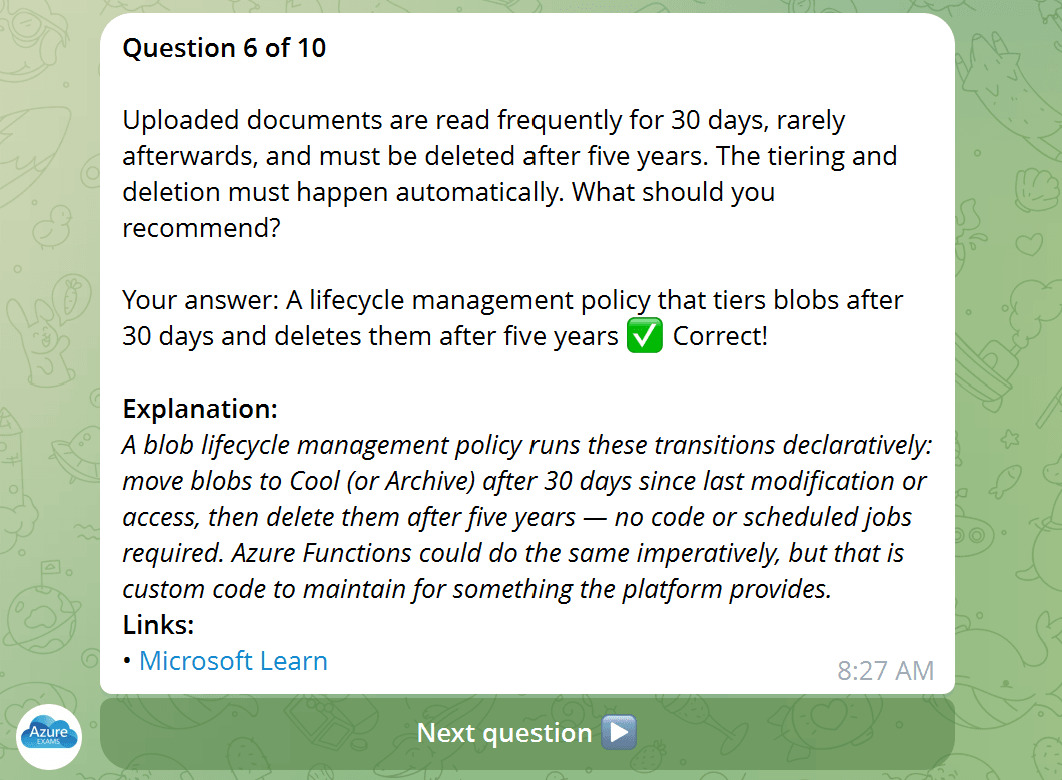
An explanation after every answer
Whether you were right, why, and a link to Microsoft Learn.
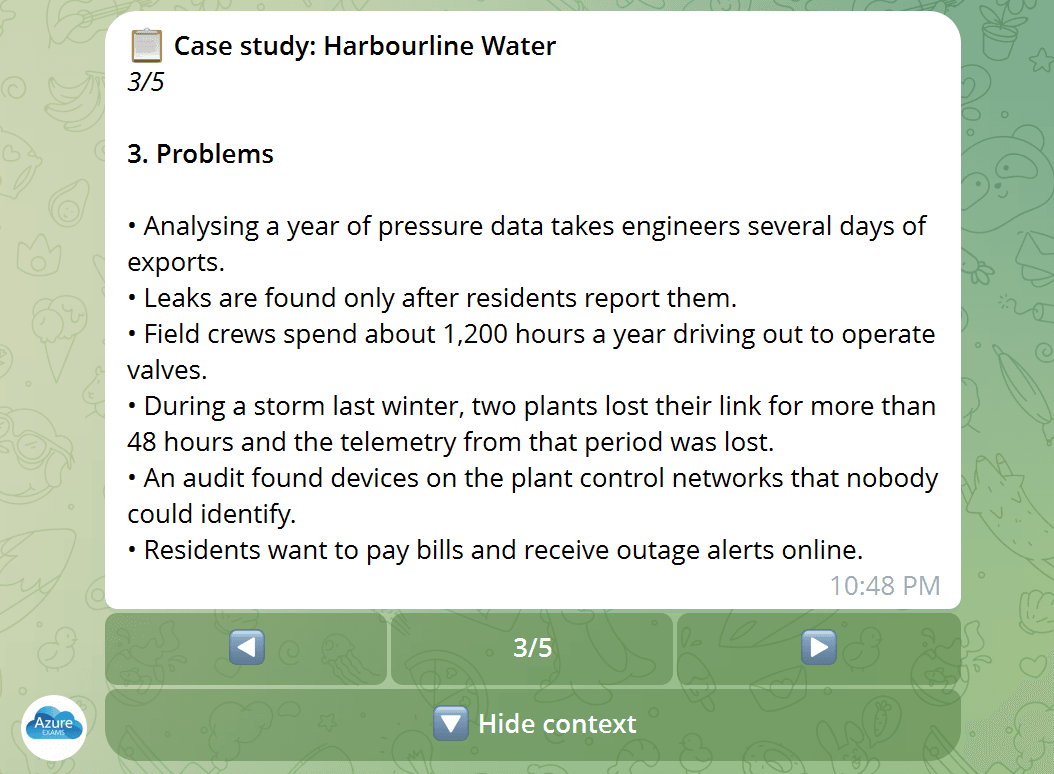
Case studies
Read a company scenario page by page, then answer questions about it.
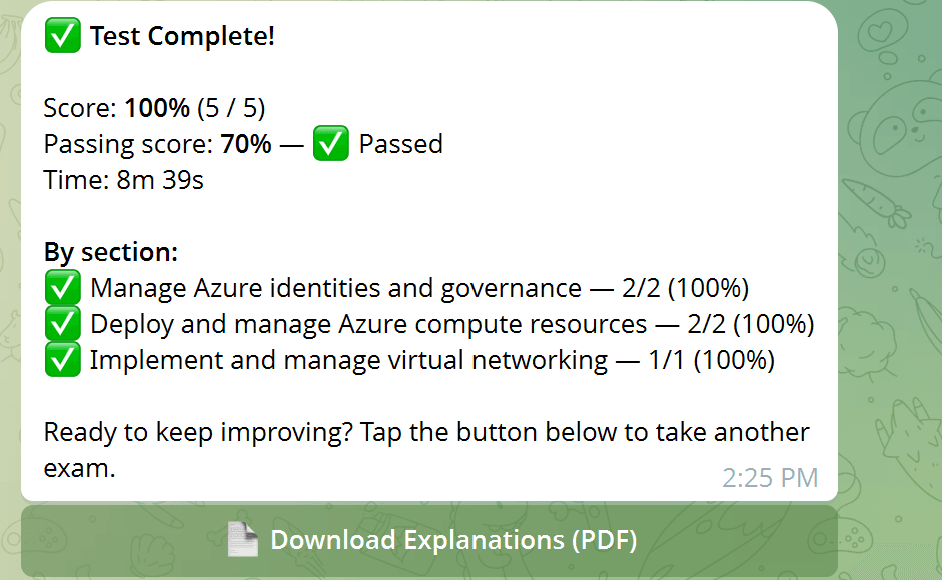
Results by section
Your score against the pass mark, plus a PDF with every explanation.
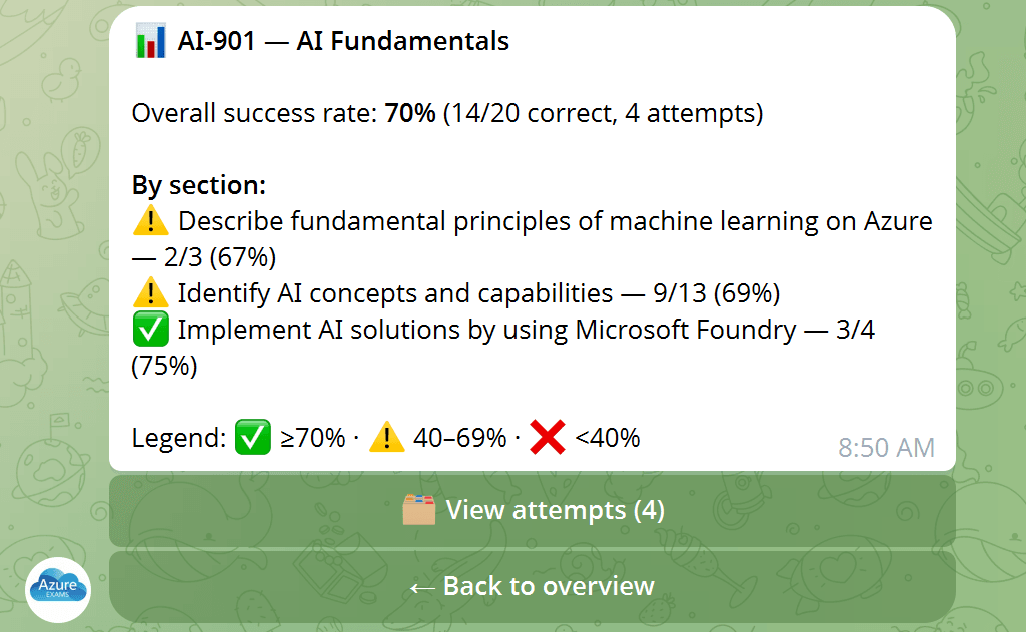
Your weak sections
Progress for each exam shows which sections to work on next.
FAQ